

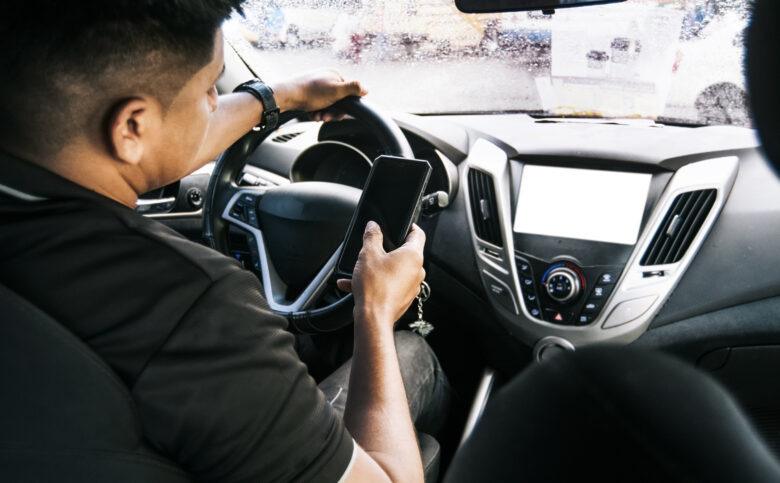
Distracted driving is no small problem in Pennsylvania. PennDOT counted 11,262 crashes involving a distracted driver in 2023—more than the state saw from alcohol‑related wrecks that year. To curb those numbers, lawmakers passed Paul Miller’s Law (also called Senate Bill 37 or Act 18 of 2024), named for a 21-year-old college student killed by a trucker who was reaching for his phone in 2010.
The new “hands-free” rule went into effect on June 5, 2025, and has changed both how police enforce phone use behind the wheel and how injury claims are proven after a crash.
What Is Paul Miller’s Law?
Since 2012, Pennsylvania has banned text-based messaging while a vehicle is moving. But that rule let drivers hold a phone to talk, browse social media, or stream video, and it applied only when the car was in motion. Paul Miller’s Law prohibits holding or supporting any interactive mobile device for almost any purpose—even while stopped at a red light. Police can use the violation itself as the reason for a traffic stop (a “primary” offense), closing a gap that let many drivers slide by.
For 14 years, Paul Miller’s parents pushed for tougher distracted‑driving rules after their son’s death on Route 33 in Monroe County. Their advocacy finally paid off when Governor Josh Shapiro signed the bill on June 5, 2024.
Key dates
- June 5, 2025 – June 4, 2026: Grace period. Police may stop a driver who is holding a phone but will issue only written warnings.
- June 5, 2026, and after: Officers may write a $50 summary citation, plus court costs and fees.
What Is and Is Not Allowed Behind the Wheel in Pennsylvania
Paul Miller’s Law clearly outlines what constitutes illegal distracted driving in Pennsylvania by defining key terms:
What the Law Covers
An “interactive mobile device” includes any handheld phone, smartphone, tablet, personal digital assistant, or similar wireless device capable of calling, texting, emailing, browsing the internet, using apps, playing games, recording or sharing media, or sending and receiving electronic data.
The law also defines “driving” broadly to include not just moving vehicles, but any time a driver is operating a motor vehicle on a public road, even when stopped at a red light, stop sign, or due to traffic delays.
“Use” of a device under the law includes holding it in your hand or supporting it with another part of your body, pressing more than one button to interact with it, or reaching for it in a way that removes you from a proper seated, seat-belted position. These definitions make it clear that even momentary handling of a phone while behind the wheel may result in a violation.
Banned Actions While Driving in Pennsylvania
Under the law, drivers may not hold, support, or interact with a device to:
- Talk or make phone calls
- Send texts or emails
- Browse social media
- Take photos or videos
- Use apps, games, or stream content
Even momentary use at a red light or in bumper-to-bumper traffic is a violation.
Permitted Hands-Free Use
Drivers may legally use a device if:
- It is securely mounted on the dash or windshield
- You use a single tap or swipe to initiate an action
- You engage voice commands or Bluetooth
- You call 911 during an emergency
- You have pulled over and parked in a safe, off-road location
Ignoring the rule at a stoplight or in bumper‑to‑bumper traffic can still trigger a traffic stop, so the safest move is to stash your phone until you arrive.
Penalties & Enforcement
Grace Period: Written Warnings Only
From June 5, 2025, through June 4, 2026, police officers may stop drivers under the new law but will only issue written warnings during this one-year education period.
Fines and Citations Begin June 2026
Starting June 5, 2026, handheld phone use becomes a ticketable offense:
- $50 fine, plus court costs and administrative fees
- No points on a non-commercial driver’s license
- Commercial drivers will have the violation recorded on their driving history
Harsher Penalties for Serious Crashes
If a distracted driver causes a fatal accident and is convicted of homicide by vehicle, the judge may impose up to five additional years in prison under the enhanced sentencing provision of Paul Miller’s Law.
Impact on Car Insurance
While the law does not add license points for most drivers, many insurance companies treat handheld-device violations as risk indicators. A citation could lead to increased premiums. Commercial drivers may also face employer discipline or lose certifications under FMCSA rules.
How Paul Miller’s Law Can Shape Your Personal Injury Claim in PA
Negligence Per Se
Pennsylvania follows common‑law negligence rules but violating a safety statute can create negligence per se, which is an automatic breach of duty. When the at‑fault driver in a crash receives a citation under Paul Miller’s Law, that ticket can make it much easier to prove liability in civil court.
Gathering Evidence
Police citations are only one piece. To support your claim, your attorney may gather:
- The police officer’s citation or warning report
- Eyewitness testimony
- Body or dash cam footage
- Cell phone records
- Event data recorder (black box) information
Because officers now have a clearer reason to document phone use under the law, evidence may be more thorough than before.
Comparative Negligence
Pennsylvania uses the 51 percent comparative‑fault rule. If a jury finds that you were also distracted and more than half responsible, you collect nothing. But if you are 50 percent or less at fault, your damages are reduced by that percent. Documenting that the other driver violated Paul Miller’s Law can keep your share of fault low and protect your right to recover medical bills, lost wages, and damages for pain and suffering.
What to Do After a Distracted Driving Crash
- Get medical help immediately and follow doctors’ orders. Injury records form the backbone of your claim.
- Save every shred of evidence. Secure your own phone so its data remain intact, photograph the scene, and ask a bystander to record the other driver’s phone use if it is visible.
- File a police report and note the officer’s name so your lawyer can obtain body‑cam footage and the citation, if one is issued.
- Notify insurers quickly but politely decline recorded statements until you have legal counsel.
- Call a Pennsylvania personal injury lawyer who understands Paul Miller’s Law. Early legal guidance helps preserve electronic evidence that carriers often purge within days.
Frequently Asked Questions about Paul Miller’s Law
Does the law apply when I’m stopped in traffic?
Yes. The hands‑free rule prohibits holding a phone even at red lights or in gridlock.
Can I touch my phone for GPS?
You may make a single tap or swipe on a securely mounted device. More interaction or holding the phone violates the statute.
Will a ticket add PennDOT points?
No points for non‑commercial drivers, but you will owe the $50 fine and court fees, and insurers may raise your rates.
How long is the warning‑only period?
Police issue written warnings from June 5, 2025, through June 4, 2026. Citations begin June 5, 2026.
Does a citation guarantee liability in my injury lawsuit?
A ticket under Paul Miller’s Law is powerful evidence, but you still need to show the violation caused your injuries and prove your damages. An experienced attorney will gather that proof.
Call Atlee Hall Today to Protect Your Rights After a Distracted‑Driving Crash
Paul Miller’s Law gives injury victims in Pennsylvania a new path to justice. If a distracted driver hurt you or someone you love, the team at Atlee Hall is here to help. Our attorneys understand how this law works and how to use it to build a powerful case on your behalf.
Contact our office today or call (717) 393-9596 for a free consultation.